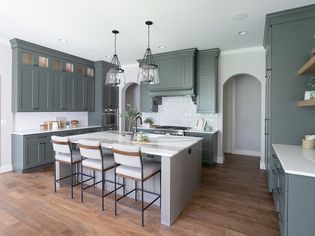
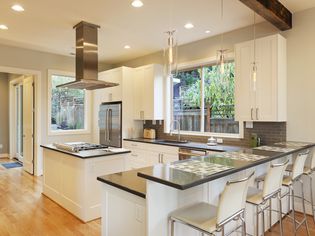
A kitchen remodel is no small feat, and in the interest of trying to make things just a bit easier on yourself, you may be tempted to ignore spacing and placement recommendations for islands, seating, and appliances. While these are not mandatory building codes, they are guidelines that come from the National Kitchen & Bath Association's (NKBA) Kitchen Planning Guidelines, so it's worth taking the time to check the suggestions and see if they conform to your planned layout.
The recommendations apply to key areas of your kitchen, including the kitchen layout, how far an island should be located from cabinets and countertops, the width of walkways, seating clearances, and the placement and spacing of appliances such as dishwashers. To make your renovation a little bit easier, we broke down a few common guidelines below.
| Space | Distance (Inches) |
| Distance between island and counter | Minimum 42 inches usually or 48 inches for kitchens with 1+ cooks |
| Walkway space | Minimum 42 inches near a work area or 36 inches elsewhere |
| Dishwasher to sink | 36 inches maximum |
| Kitchen bar seating | 32 to 44 inches, depending on exact location and amount of expected foot traffic nearby |
Understanding the Kitchen Triangle Work Area
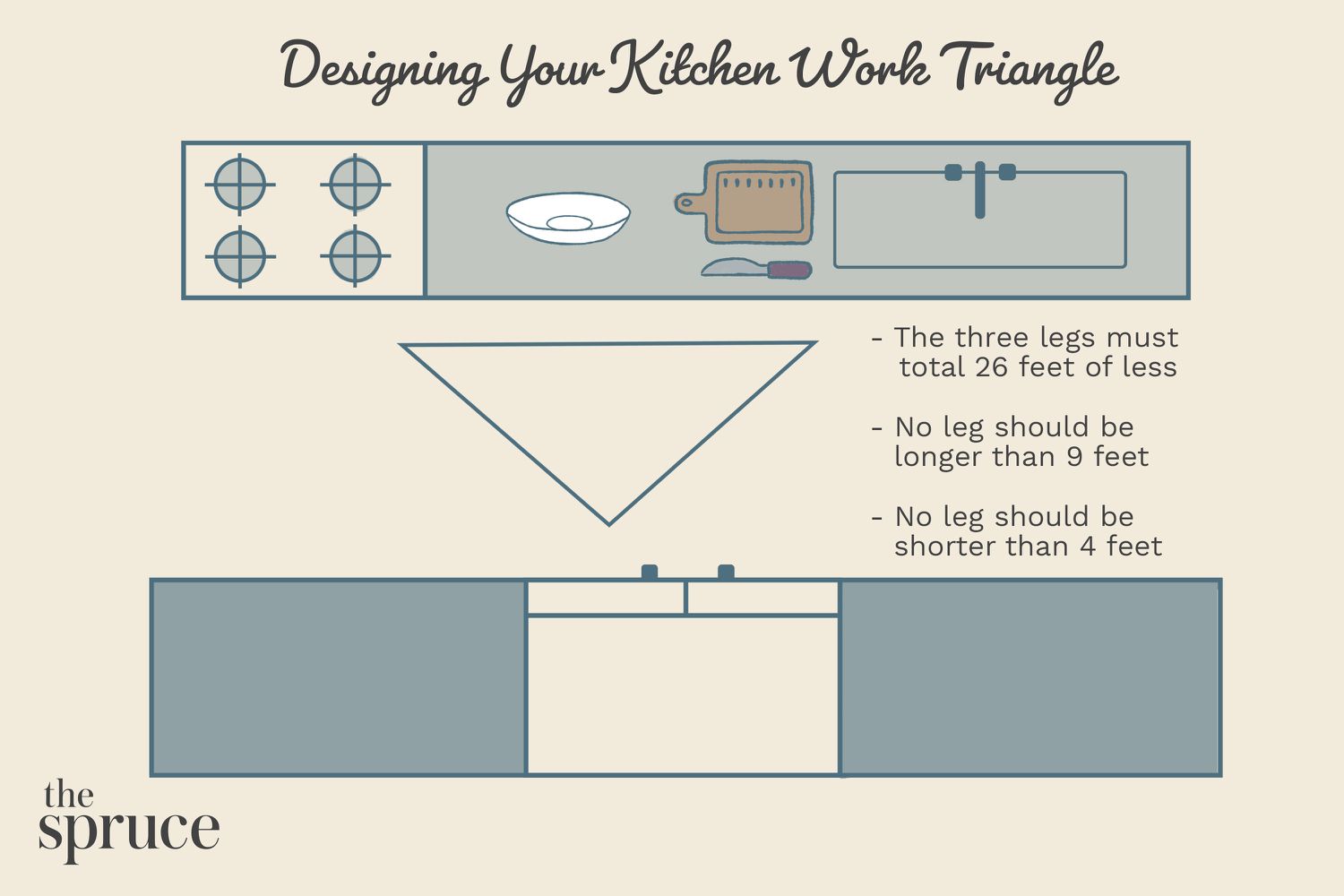
The umbrella recommendation for implementing a kitchen design is the kitchen triangle. The kitchen triangle is a design concept recommending the position of the three most important work areas—the sink, refrigerator, and stove. The recommendation is to position the three items in a triangular fashion to minimize the distance you would have to travel to reach each "zone." The triangle is designed for efficiency and comfort. For example, moving between the sink, refrigerator, and stove to the prep area can be tiresome and inefficient if the distances are too far apart or too crowded.
The kitchen triangle has many variations, as long as the three "legs" of the triangle are kept in check and add up to the recommended total. Leg measurements are not set in stone nor are they part of a building code, they are simply recommendations to keep the distances well-balanced. Here are kitchen work triangle guidelines:
- All three legs of the triangle should ideally total 26 feet or less.
- No individual leg should be more than 9 feet (too far apart).
- No individual leg should be shorter than 4 feet (too restrictive).
The Spruce / Caitlin Rogers
Call an Expert
A full kitchen remodel is a massive undertaking for the average DIYer, and it can be difficult to keep track of all of the relevant spacing and distance rules. Consider hiring a contractor or kitchen and bath specialist to make this process more straightforward.
Distance Between Kitchen Island and Counter
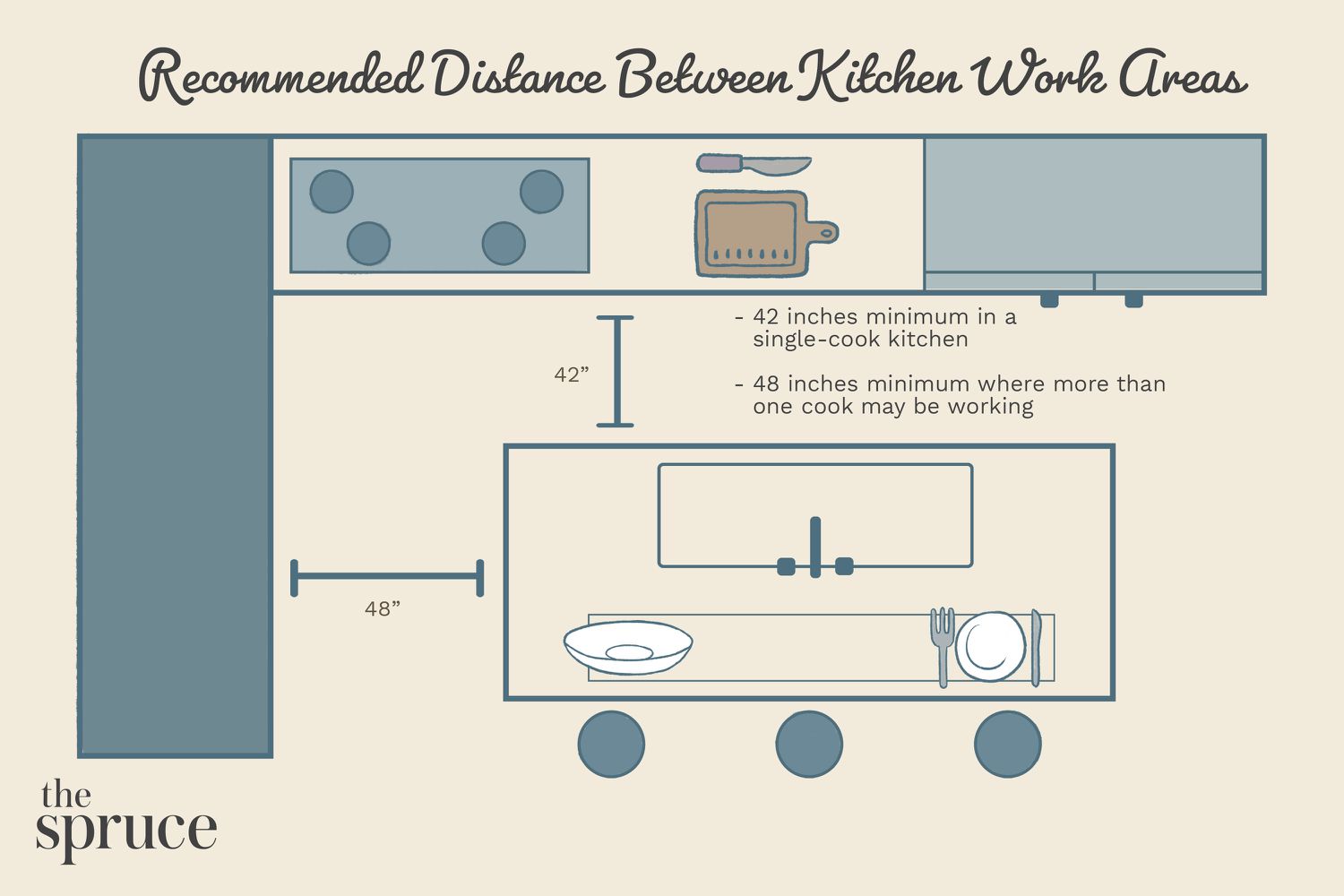
Within the confines of the work triangle are other distances to consider, such as how far apart the island and counters against the walls should be. Kitchen island clearance is important because some kitchens may not be large enough to have an island. The recommendation is to have a distance of 42 inches to 48 inches between the perimeter countertops and the kitchen island. If your oven opens into the work aisle, you will usually need 48 inches of clearance space.
The Spruce / Caitlin Rogers
Kitchen Walkway Spaces
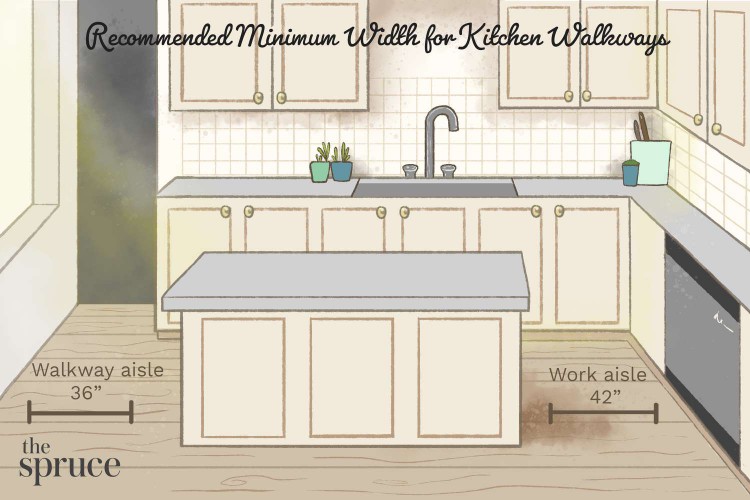
There is also the walkway to consider, where passersby go through the kitchen. A walkway is not part of the kitchen triangle because it is not part of the kitchen's working and prep area. The recommended minimum width for a walkway is 36 inches, but a walkway can be as wide as you wish.
The Spruce / Caitlin Rogers
Kitchen Seating Clearance Recommendations
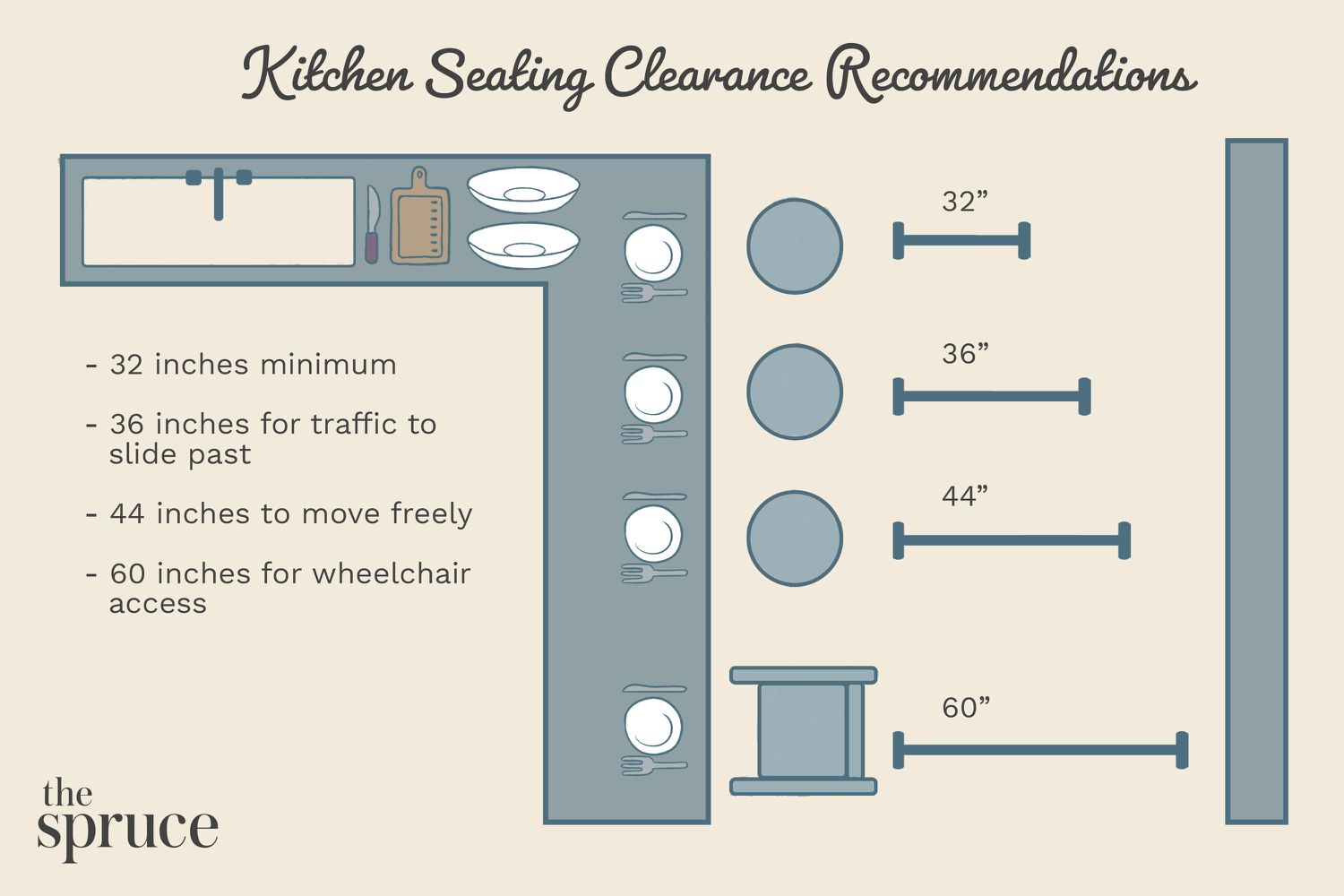
Kitchen seating clearance recommendations are also flexible and can be adapted to your needs. If you have a breakfast bar or an in-kitchen eating table, make sure your chairs have a minimum of 32 inches (not ideal for foot traffic) to 44 inches (better for foot traffic) from the chair back to the wall or counter. Wheelchair access requires at least 60 inches of clearance space.
The Spruce / Caitlin Rogers
Dishwasher Spacing and Placement Recommendations
Dishwashers and sinks can easily get crowded since they need to be close in proximity to take advantage of their shared drainage and water supply.
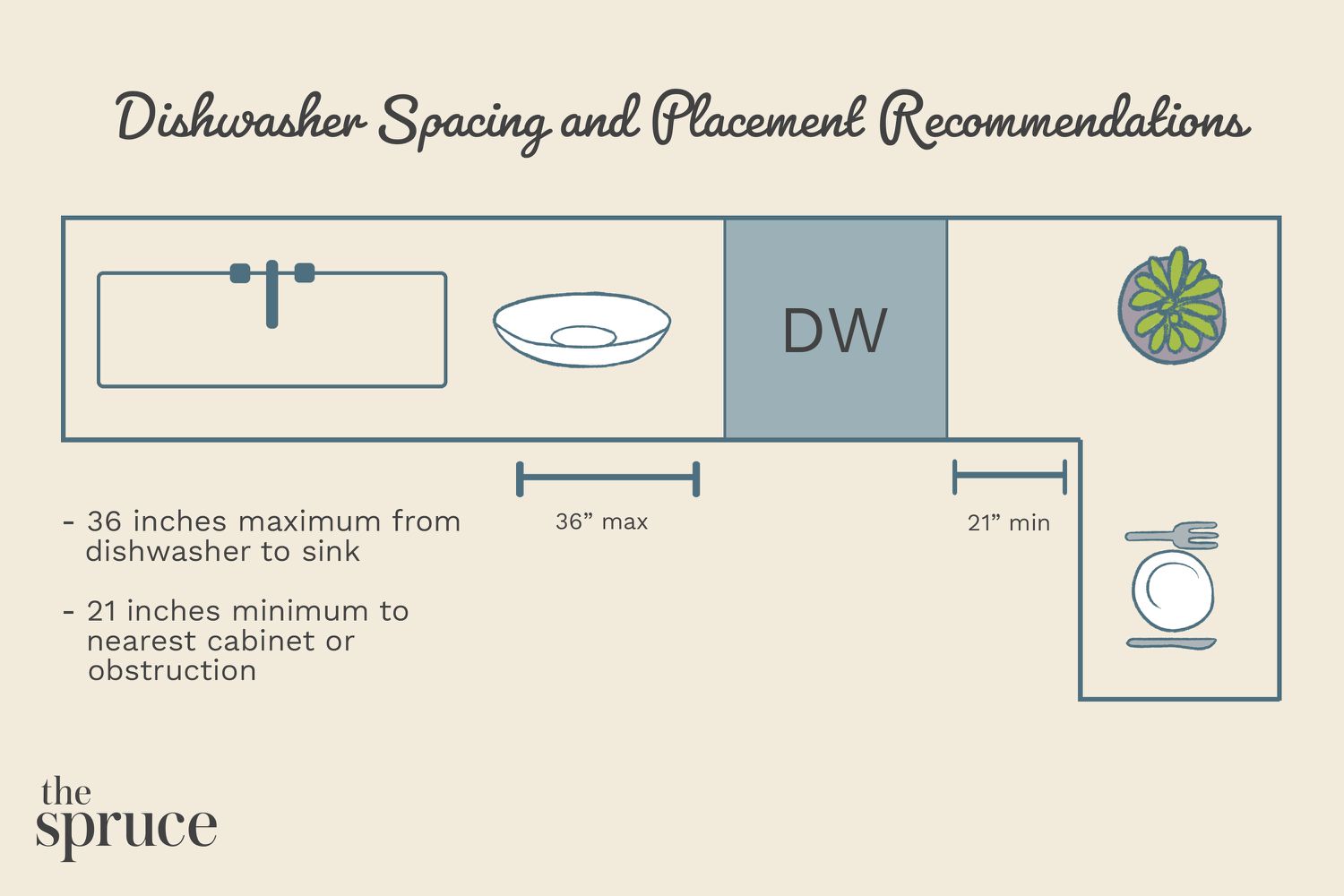
- Dishwasher to sink distance: The distance between the dishwasher to an adjacent sink should be a maximum of 36 inches. This allows easy transport of dishes from the sink to the dishwasher and keeps the under-counter water hookups close.
- Dishwasher to base cabinets distance: The dishwasher should have a minimum of 21 inches of space between it and the nearest base cabinets or other obstructions to give the door plenty of room to open freely without hitting handles or other objects.
The Spruce / Caitlin Rogers
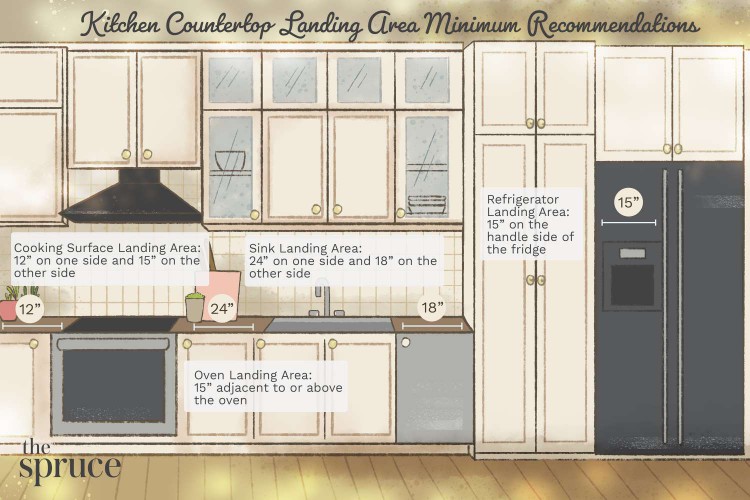
Adding a Kitchen Countertop Landing Area
A kitchen landing area is a countertop space next to the sink, refrigerator, cooking surface, or oven that lets you safely place items. For example, if you do not have a landing area near a stove or oven, you may be tempted to place a hot pot or pan in a close but unsafe spot. Here are some rough kitchen countertop landing ideas and guidelines:
- Sink landing area: 18 inches to 24 inches on each side for placing dishes to dry or that need to be washed
- Refrigerator landing area: 15 inches on the side of the fridge that has the handle (for a single-door model) so you can easily place items that need to go into or out of the fridge
- Cooking surface landing area: 12 inches to 15 inches on each side for hot items and ingredients used for cooking
- Oven landing area: 15 inches adjacent to one side, both sides, or on the counter above the oven for hot items and ingredients used for cooking
The Spruce / Caitlin Rogers
- What size kitchen is too small for an island?
To fit a small 2-foot wide by 4-foot long island, your kitchen should be at least 12 feet wide by 8 feet long. A narrow island will not typically accommodate an eating area or built-in appliances. However, you can certainly have a custom island made for under 24 inches wide to give you valuable additional counter space. It will also help to have a French door-style refrigerator (doors have a shorter swing) for adequate clearance.
What is the width of most kitchen islands?A kitchen island should have a minimum width of 2 or 3 feet.
Where should you never put a refrigerator in the kitchen?Do not put a refrigerator near the oven or stove because the heat will make the fridge work harder to stay cold. Having a fridge in a high-traffic area is also not ideal since an open door can block the aisle.
What is the minimum clearance around a kitchen island?Clearance around kitchen islands is crucial, and some kitchens are just not big enough to house an island safely. At a minimum, there should be at least 42 inches of space between a kitchen island and the nearest countertop. If you have an oven that opens into this space, you will need even more room, at least 48 inches.
What is the 3x4 kitchen rule?The 3x4 rule refers to the idea that every kitchen should have three separate counters, each about four feet long. This is unattainable for many, and mainly applies to intense home cooks. However, it's a nice goal to set when remodeling or building a new kitchen.
Recommended Articles
 PAINTING
5 Types of Paint Finishes: How to Actually Choose the Right One?
Familiarizing yourself with the different types of paint finishes is the best way to ensure you choose the right one for your paint project. Whether you're painting walls, trim, cabinetry, or even you
INTERIOR-DECORATINGWe Asked Designers If You Should Leave Curtains Open When You're Away and They Did Not Hold Back
Key Points Closed curtains during the day can signal you're away, but open ones may expose valuables.Partially open curtains or sheers can limit visibility into your home.In hot weather, closed curtai
ROOM-DESIGN-AND-DECORATING6 Ways Designers Are Saving Their Money on Their Next Home Makeover (and You Should Too)
Key Points Designers save big by shopping secondhand, reusing quality items like furniture, frames, and fixtures that add character and reduce waste.They recommend reupholstering or refinishing existi
INTERIOR-REMODEL-AND-REPAIR3 Common Renovation Mistakes Designers Really Hate (and How to Avoid Them)
Embarking on a home renovation can stir up a flurry of emotions. The process is exciting, daunting, fulfilling, and exhausting. Even one renovation hiccup can turn into a significant misstep down the
HOME-IMPROVEMENTHow Much Does Window Replacement Cost? Top Brands and More
Home window replacement is a necessity when problems arise, such as air leaks, water infiltration, thermal leaks, fogged glass, or insect intrusions. When it's time to choose windows for your home, yo
HOME-IMPROVEMENTFogged Window Repair Solutions
Commonly called thermal windows, insulated double- and triple-pane windows, officially known as IGUs (insulated glass units), offer far better energy efficiency than single-pane glass windows. Whether
HOME-IMPROVEMENTBuilding Your Own House: A Step-by-Step Guide
Building a house has an undeniable allure. A new house can be designed exactly how you picture it, allowing you to take control of the building process. You can even save money by avoiding any unfores
BATHROOM-REMODEL-AND-REPAIRHow to Choose the Best Paint for Bathroom Walls, Ceilings, Trim, and Cabinets
The best paint for bathrooms addresses the room's wet and overly humid conditions, prevents mold growth, resists mildew, and remains attractive for the long term. The best way to do this is to start w