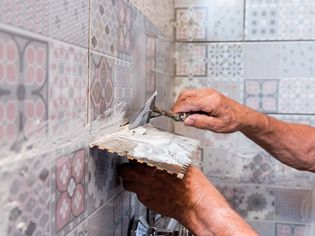
- If your home can support excess weight and the existing tiles are in good condition, you can consider tiling over tile.
- You should tile over tile to save time and money and it can also be an eco-friendly approach.
- Make sure to prep your surface and choose the correct adhesive and layout.
If you've been putting off a tile project because you don't want to rip out the old tile, we get it. Removing tile isn't for the faint of heart—it's a physically demanding job that yields a lot of heavy waste material, which can be difficult and expensive to dispose of. What if we told you you don't necessarily have to remove the old tile before installing the new tile?
Below, we've answered whether you can tile over tile and explained what you need to know before you attempt it.
Can You Tile Over Tile?
Yes, you can tile over tile—most of the time. The biggest determiner of whether you can tile over tile is if the home's framework can support the excess weight of the additional tile and if the existing tiles are in good enough condition.
The condition of the existing tiles is one of the most crucial considerations when attempting to tile over tile. If they aren't properly adhered to the substrate, you will only create a future problem by putting more tile on top of them.
To check your tile's adhesion, tap each tile with a small piece of wood or similar object to ensure it is still properly adhered to the substrate. If the tile sounds hollow when you tap it, it likely is no longer adhered and must be fixed before moving forward.
Want more home reno project tips and inspiration? Sign up for our free daily newsletter for the latest how-tos, reno guides, and more!
Reasons Why You Should Tile Over Tile
So, we've established that you can tile over tile, but should you? While it may seem like a silly idea to those who have traditionally removed tile before installing new tile, there are actually several benefits to tiling over tile. Here are some reasons you should consider tiling over tile:
- You can save time. One of the most time-consuming parts of tiling a space that already has tile is removing the old tile. By simply placing the new tile on top of it, you eliminate this step entirely.
- You can save money. Tile isn't inexpensive to dispose of. Most individuals have to haul it to a special landfill to discard it, which will charge you by weight.
- It's an eco-friendly approach. Because you're avoiding the use of the landfill, leaving your old tile installed and tiling over top of it is a more eco-friendly approach.
- It's easier. Removing tile is often extremely difficult and labor-intensive.
- You eliminate potential substrate damage. Removing old tile often results in damage to the substrate, which must be repaired before the new tile can be installed.
What to Consider
While there are numerous benefits to installing tile over tile, there are a few things you should consider before attempting it. Take measurements to ensure the additional height of the floor won't affect things such as appliance and door clearance, and that it won't pose as a tripping hazard.
Warning
Tiling over tile can add significant weight to the tile surface, which can put a strain on the walls and floor system. If you're unsure if your home's framework can support the additional weight, consult a licensed contractor or engineer before moving forward.
The process of installing tile over tile varies slightly from the traditional tile installation process.
- Surface Preparation: Once you've visually inspected the existing tile to ensure it is in good enough condition to support the new tile, you must thoroughly clean it using an all-purpose cleaner.
- Choosing the Right Adhesive: For most tile-over-tile installations, traditional thinset mortar will do. However, it's worth taking the time to consult a tile professional about the tile you're tiling over to ensure you're using the proper adhesive. In some cases, epoxy mortar may be necessary, which is recommended for professional use only, as it cures very quickly and can be difficult to work with.
- Tile Layout and Design: Your tile layout and design won't change whether you're tiling over a substrate or tiling over a tile. You should still measure the room and factor in the width of each tile plus the width of your grout line when calculating your tile needs, then buy 10% more.
- Grouting and Sealing: The process of grouting and sealing tile doesn't change based on what's below the tile. Apply the grout as usual then, once it's fully cured, apply the grout sealant.
- How to prepare to tile over tile?
To prepare to tile over tile, start by ensuring your home's subfloor and walls can support the weight of the additional tile. To prep the tile's surface, clean it thoroughly and apply an even coat of thinset mortar. Once the mortar is set, install the tiles as you normally would if you were installing them directly on the subfloor.
Is it better to tile over tile or remove it first?There are benefits of tiling over tile and benefits of removing the old tile. Tiling over tile can save you money, time, and labor, but it will add weight to the tiled surface and can yield poor results if the old tile is in poor condition.
Removing old tiles allows you to start fresh and puts less strain on the home's framework, but it takes longer and costs more upfront.
What are the disadvantages of tile over tile?There are numerous possible disadvantages of tile over tile, but they aren't guaranteed. These disadvantages include an uneven surface, an excessively tall floor height, too much weight on the framework, poor adhesion, moisture issues, and poor flooring stability.
However, many of these possible disadvantages are caused by poor installation rather than the placement of the tile over the tile.
Recommended Articles
 PAINTING
How to Calculate How Much Paint You Need
When embarking on a paint project, the last thing you want is to spend too much or too little on the paint you need. Buy too little and you're interrupting your project to run back to the store. Buy t
PAINTINGHow to Use Paint Thinner
Paint thinner is a broad term defining numerous solvents designed to thin or remove paint from brushes, rollers, and other tools. Examples of paint thinners include turpentine, acetone, naphtha, miner
SKILLS-AND-SPECIALTIESInside Your Main Electrical Service Panel
Any electrical repair in your home involves turning off the power to the circuit you'll be working on, and you do this at the main electrical service panel. You may know the service panel as the break
SMALL-SPACES6 Designer Tips for Creating a Small Luxurious Patio You'll Love to Entertain In
Just because your patio space is on the smaller side doesn't mean that you can't turn it into a luxurious outdoor oasis. Here, we've spoken with interior designers who share some of their top tips for
ROOM-DESIGN-AND-DECORATINGDetermining Spans and Spacing for Wall Shelves
There are two important considerations when installing wall shelves: first, making sure the material used for the shelves has an appropriate span capacity; and second, considering the vertical spacing
INTERIOR-REMODEL-AND-REPAIRHow Much Does an Air Conditioner Really Cost to Install? What to Know
The average air conditioner cost ranges from about $2,500 to $7,500, depending on the size of the system, the type of air conditioner, the efficiency rating, and several other cost factors. Use this g
INTERIOR-REMODEL-AND-REPAIR8 Popular DIY Projects That Can Decrease Your Home's Value, a Real Estate Agent Says
Tackling DIY home improvement projects can make your home look better, be more functional, and can even increase the value of the home, making it a better investment for when you eventually sell. Howe
KITCHEN-REMODEL-AND-REPAIR5 Types of Kitchen Lighting
Kitchen lighting can be divided into either general lighting (the entire room) or work lighting (specific areas). Within those two broad categories are ceiling lights, recessed lights, track lights, p