
When installing subway tile in your kitchen, there are a number of routes that you can go as it pertains to grout. While many people opt for a simple white, you may wish to think a bit outside the box and go with gray instead.
Below, experts discuss the merits of gray grout and highlight why they find it to be a strong choice to pair with subway tile. They also raise key considerations to keep top of mind when working with gray grout.
Keep reading so that you'll be as informed as possible as you tackle your kitchen renovation.
Meet the Expert
- Alana Marie is the founder of Alana Marie Interiors.
- Melissa Sakell is a kitchen and bath designer with Anthony Wilder Design/Build.
- Becky Shea is the founder and creative director of Becky Shea Design.
Why You Should Choose Gray Grout for Subway Tile
Easy to Maintain
Experts appreciate pairing subway tile with gray grout because the color is more practical than lighter hues in terms of withstanding wear and tear.
"Light grout in a kitchen, particularly in high-traffic areas like a backsplash, can be challenging to keep clean and tends to show stains faster, and is harder to clean," Alana Marie, the founder of Alana Marie Interiors, says.
Gray, on the other hand, is going to stand up to daily use much more successfully since it hides dirt better, requires less maintenance, and helps maintain a fresh, polished look for longer, Marie says.
Gray is also a nice choice for warming up your space and will result in a more dimensional look in the kitchen, Melissa Sakell, a kitchen and bath designer with Anthony Wilder Design/Build, adds.
It Won't Go Out of Style
Additionally, when selecting a tile and grout combination, you're going to want to opt for a look that will remain in vogue for years to come, given that kitchen renovations are time-consuming and costly. This is another reason why Sakell says gray is an excellent color to use for grout—it's an extremely timeless hue that will complement any interior color scheme.
Best of all, the color gray will pair nicely with a wide range of kitchen design styles and comes in several different shades, making it easy to select one that suits your space. Try different shades with your subway tile before landing on one.
"Gray is a true chameleon; it can be warm or cool, barely there or almost black so you can really capture any look with it depending on the final shade you select," Sakell says.
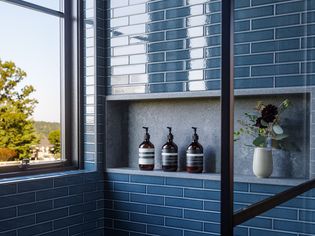
Keep in mind that while many people picture subway tile and think of its traditional white form, the tile comes in many different colors to suit a wide variety of spaces. Becky Shea, the founder and creative director of Becky Shea Design, landed on a stunning blue subway tile for a bathroom she designed and opted to incorporate gray grout.
"The soft gray tones in the grout really brought out the blues and grays throughout the room, creating a cohesive and balanced look without overpowering the space," she says. "It’s those little choices that can make a big difference in pulling everything together."
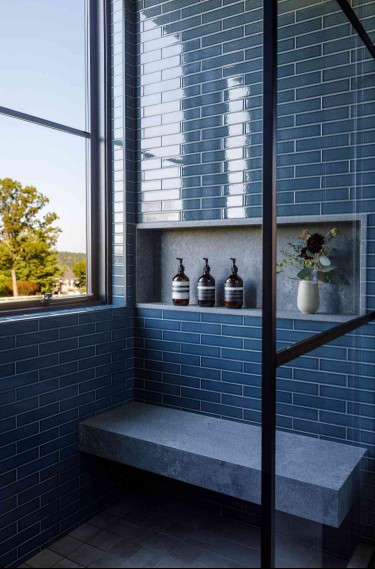
Design by Becky Shea / Photo by Jake Shea
Want more design inspiration? Sign up for our free daily newsletter for the latest decor ideas, designer tips, and more!
Disadvantages of Gray Grout on Subway Tile
- Grays can be difficult to read. As Sakell notes, gray tones pull from other colors nearby them and therefore don't seamlessly translate from one space to another. Sakell explains how to always look at the grout with the rest of the materials getting installed.
- Professional installation is essential. Adding gray grout to your kitchen isn't something that you should view as a simple DIY project. Rather, now is an ideal time to bring in a professional to assist you to ensure that everything is installed to your liking. If you're thinking of going with a darker shade, Sakell emphasizes the importance of making sure your installer is confident with the installation since any errors will be more apparent due to the high contrast combination.
Recommended Articles
5 Easy Home Projects You Can Finish in Just One Day for a Whole New Look
Anyone who isn’t a DIY pro but has tried their hand at a home project knows one thing to be true: Doing it yourself often can take a lot more time—and cost a lot more money—than we’re usually led to b
How to Choose Sandpaper Grit
Sandpaper has a variety of uses in home repair activities but is most often used to clean and smooth wood or metal in preparation for finishing or painting. To determine what type of sandpaper grit yo
What Is Toile Design?
A French word meaning "linen cloth" or "canvas," toile is a type of canvas-like fabric that has been a popular decorating element since the mid-1700s. The term "toile" can have a few different meaning
Everything You Need to Know About Standard Closet Sizes and Dimensions
Knowing your closet dimensions is key when moving into a new house or aiming to organize your existing closet. Understanding the differences between small reach-in closets and larger walk-in closets h
How Much Does a Home Addition Cost?
Building a home addition is the ultimate way to add large amounts of fully usable space to your home and enhance its resale value. The average cost to build a home addition is $50,000; typically, cost

Want a Lower Energy Bill This Fall? Experts Say You Should Do One Task While It’s Still Warm
Key Points Sealing gaps around windows and doors before fall can cut energy bills by up to 20% and prevent moisture damage.Experts say doing it early makes fixes easier and improves heating efficiency
8 Popular DIY Projects That Can Decrease Your Home's Value, a Real Estate Agent Says
Tackling DIY home improvement projects can make your home look better, be more functional, and can even increase the value of the home, making it a better investment for when you eventually sell. Howe
Apron Sink vs. Farmhouse Sink: Everything You Need to Know
If you’ve ever shopped for a kitchen sink and considered the farmhouse aesthetic, you’ve probably seen “apron” and “farmhouse” lumped into a single category, combined within the product names, or used