It's confusing to understand the various types of hard, stone-like floor tiles available, including quarry tile, terracotta, and ceramic and porcelain tile. But quarry tile is markedly different from other tiles in that it is not very porous or glazed. Learn more about the qualities of quarry tile and where to use this beautiful natural tile.
What Is Quarry Tile?
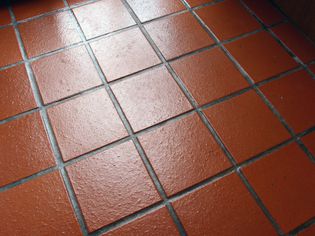
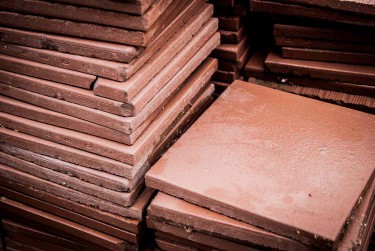
Quarry tile is a hard, impervious, unglazed paving tile made from the ground minerals formed and fired in much the same way as is used to make brick. Quarry tiles are not extracted from a quarry which makes the name slightly misleading although the natural materials they are made from—clay, shale, and feldspar—do come from quarries. Quarry tiles are typically harder than ordinary clay bricks, due to the minerals used and the high firing temperatures. Unlike clay terracotta, quarry tiles are not porous and will resist water; and unlike ceramic tile and porcelain, quarry tile does not have a surface glaze layer.
Quarry Tile Basics
Quarry Tile Is Fired
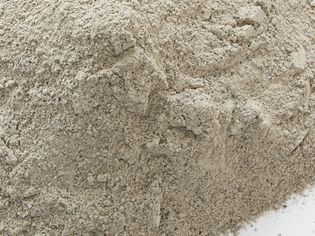
The tiles themselves are not sliced from a quarry like granite slabs. Instead, the quarried minerals are ground together, extruded into tile forms, and then baked at high temperatures over 2,000 degrees Fahrenheit.
Quarry Tile Is Used for Homes and Commercial Buildings
Quarry tile is used for indoor and outdoor applications in homes and commercial buildings. It is used in homes to add a unique, warm feel to a space, such as in a sunroom, entryway, or kitchen. Commercial buildings use quarry tile because it is very durable and hides stains well.
Quarry Tiles Come in Many Colors
Quarry tile is often red but it is also brown, gray, or tan. You'll find lighter shades of quarry tile but remember that unsealed quarry tiles can show stains, especially if it's installed in a patio or exterior walkway.
Quarry Tiles Are Slightly Absorbent
Various types of tile absorb water at different rates. Quarry tile absorbs small amounts of water, between 0.5 to 3 percent. Though quarry tiles are not completely impervious to water, their low absorption rating means the tile is suitable for areas that are constantly wet.
Quarry Tiles Don't Need Sealing
Quarry tile is fired at extremely high temperatures, making them less porous than other tiles. In many applications, good-quality quarry tile does not require sealing, though it will never be quite as impervious to stains as a glazed ceramic tile.
Quarry Tile Comes in Different Sizes
Generally, you will not find the 12-inch by 12-inch or larger sizes that you can find with ceramic tiles. Quarry tiles are most often found in the 6-inch square size but can range up to 8 inches square.
Quarry Tiles Are Typically Thick
Quarry tile is usually thicker than ceramic tile for floors. Most quarry floor tiles are a 1/2 inch to 3/4 inch thick compared to ceramic floor tiles which are typically 3/8 inch to 5/8 inch thick.
Quarry Tile Has Texture
One distinguishing aspect of quarry tile is its rougher texture which provides great traction for exterior applications. But you can also find quarry tile intended for interior use that is surprisingly smooth and welcoming to bare feet.
Sealing Won't Ruin Quarry Tile
It's a myth that sealing ruins quarry tile. Sealing quarry tile does not change its color or ruin it. Sealing can further prevent the tile from staining or discoloring in certain locations.
Best Uses for Quarry Tile
Quarry tile can be used in many places and avoided in others. Here are a few tips:
- Main interior floor areas: Quarry tiles work well in living rooms, dining rooms, and kitchens. The use of area rugs can soften the tiles and sounds in the room.
- Interior or exterior walkways and entryways: Quarry tile has a high degree of slip resistance and holds up well under heavy foot traffic.
- Backsplashes: Unglazed quarry tile works well for backsplashes near dry countertops. Use sealed quarry tile as a backsplash near a stove so cooking grease and food stains will not be a problem.
- Some countertops: Use quarry tile on side counters that are not used for food preparation. Avoid using quarry tile for heavily used kitchen and bathroom countertops.
Quarry Tile Pros and Cons
Pro
- Slip-resistant, textured
- Somewhat stain-resistant
- Low water absorption rate
- Thicker than other tiles
- Versatile, can be used indoors and outdoors
Cons
- Difficult to cut, thick
- Can be hard on the feet
- Prone to damage from heavy falling objects
- Limited color and size selection
- Salts may cause surface hazing (efflorescence)
Quarry Tile Color Options
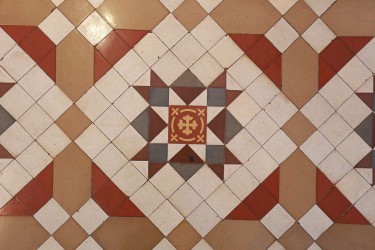
Quarry tiles come in a small variation of earthen tones, such as dark gray, light gray, tan, brown, dark brown, and beige. Red is the most popular quarry tile color, likely because it most closely approximates the color of the natural clays in a quarry tile.
When You Should Seal Quarry Tiles
Quarry tile does not need to be sealed for normal wear. For high-traffic areas or for spaces where oil and grease may be tracked in, sealing may be necessary to preserve the beauty of the tile. Seal quarry tile with a water-based penetrating sealer, not a surface-type seal. The sealant should penetrate deeply to effectively repel moisture.
- What is the difference between ceramic and quarry tile?
Quarry tile is a type of unglazed ceramic tile. Quarry tile is made by extrusion, fired at a very high temperature, and is thicker and more durable than ceramic tile.
What is the life expectancy of quarry tile?Quarry tile is extremely durable and can last the lifetime of a building or home when properly maintained.
Do quarry tiles need to breathe?Since quarry tile can absorb some moisture, it is a good idea to let the tiles breathe to allow any wetness and salts to evaporate and dissipate.
Recommended Articles
 HOME-DESIGN-STYLES
What Is Retro Design? Explore Its History and Key Elements
Retro style is making a major comeback and is especially popular among millennials. We spoke with designers who reflected on the style's origins and key elements and also offered advice for those look
INTERIOR-DECORATINGI’ve Been Thrifting for Years—These Are the 6 Home Decor Gems I Never Skip
Key Points Repurpose thrifted items like crystal ashtrays and vintage glassware for style and function.Collect unique decor pieces such as bust sculptures and thrifted artwork to add personality.Stock
INTERIOR-REMODEL-AND-REPAIRWhat It Means to Have Low Humidity in Your House
The space inside your home can usually be considered a controlled environment, where you can raise or lower the temperature by adjusting the thermostat. Heat is sealed inside during colder months to e
HOME-IMPROVEMENTHow Much Does Window Replacement Cost? Top Brands and More
Home window replacement is a necessity when problems arise, such as air leaks, water infiltration, thermal leaks, fogged glass, or insect intrusions. When it's time to choose windows for your home, yo
EXTERIOR-REMODEL-AND-REPAIRWhat Is Fly Ash and How Is It Used in Concrete?
Key Points Fly ash improves concrete durability and reduces permeability.Using fly ash in concrete can lower CO2 emissions and hazardous waste.Fly ash usage increases concrete's resistance to cracking
EXTERIOR-REMODEL-AND-REPAIRHouse Bump-Out Additions and How They Can Add Space
Few homeowners will ever say that they want less space. Once you live in a house for a while, the house always seems to get smaller with the constant accrual of furniture, pets, people, and belongings
BATHROOM-REMODEL-AND-REPAIRHow to Choose a Bathroom Exhaust Fan
Bathroom exhaust fans are required by the NEC (National Electrical Code) and local building codes for any bathroom that doesn't have a window that can be opened to provide ventilation. In some jurisdi
KITCHEN-REMODEL-AND-REPAIRApron Sink vs. Farmhouse Sink: Everything You Need to Know
If you’ve ever shopped for a kitchen sink and considered the farmhouse aesthetic, you’ve probably seen “apron” and “farmhouse” lumped into a single category, combined within the product names, or used