
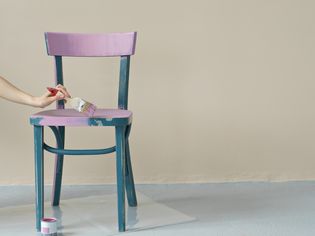
Whether you’re interested in flipping or upcycling a furniture piece for personal use in your home or to resell as part of a side gig, you’ll want to avoid these common mistakes that professional flippers see fledgling DIYers make time and time again.
Meet the Expert
- Carrie Spalding is the founder of a DIY home decor blog and YouTube channel called Lovely Etc.
- Deborah Meyers is a furniture makeover artist.
Not Using the Correct Paint on Furniture
Lovely Etc.
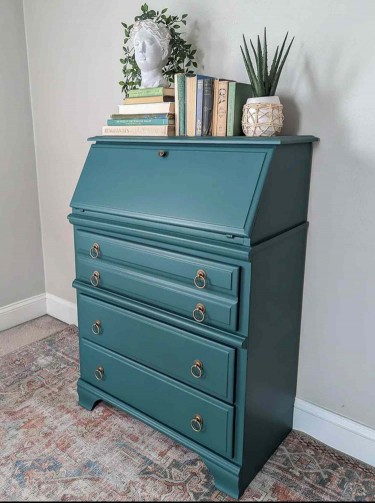
It’s easy to grab paint from your local hardware store or to reuse leftover paint you might have sitting around following a previous home project. But be forewarned that paint designated for wall use doesn’t cut it on furniture.
“Wall paint isn’t formulated to withstand the wear and tear that furniture typically endures,” Deborah Meyers, a furniture makeover artist, explains. “It lacks the durability, hardness, and adhesive properties required for high traffic surfaces, leading to chips, scratches, and peeling.”
She advises that DIYers should find paints specially developed for furniture applications that are self-leveling to minimize brush strokes or roller marks. In particular, she recommends water-based enamel or mineral paint.
Want more home reno project tips and inspiration? Sign up for our free daily newsletter for the latest how-tos, reno guides, and more!
Not Prepping Properly
@vintagefurniturefinds / Instagram
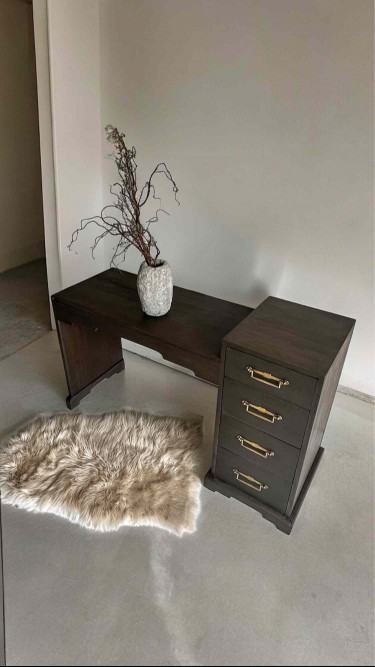
Before flipping a piece, one has to properly prep the piece, from cleaning and sanding to priming it. But one of the most common mistakes eager DIYers make is not taking these necessary steps.
Carrie Spaulding, the founder of a DIY home decor blog and YouTube channel called Lovely Etc, explains how it can be easy to jump right into painting but taking the time to prep will help the paint adhere well and lay a smooth foundation for a flawless finish. Spaulding often takes more time prepping than painting when she's working on a project.
Meyers adds that DIYers also need to confirm what materials they’re dealing with to prep properly. Flippers may mistakenly assume a piece is solid wood when it’s really veneer or particleboard, and as a result, they apply flawed techniques such as aggressive sanding or using finishes that can actually damage the piece and reduce its value.
"Inspect the edges and undersides of the piece for telltale signs of veneer or particleboard," Meyers says. "Learning to recognize woodgrain patterns and textures can also help in identifying the material.”
Not Considering Hardware
@vintagefurniturefinds / Instagram
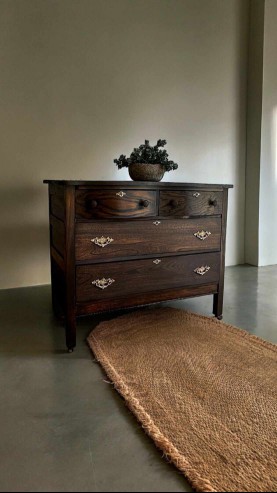
For furniture items that might have missing or damaged hardware, whether it’s a desk that once had drawer pulls or an armoire with doors missing knobs, it’s a good idea to investigate hardware replacement options first.
Spaulding reminds us that hardware choices can make huge differences in furniture appearance, from making the piece look current or outdated to looking like an obvious (and badly done) flip with mismatched or off-scale hardware.
“My biggest pet peeve is when flippers use two small cabinet knobs to replace a single wide-drawer pull,” she says. “It’s obvious that they couldn’t find a new pull with the correct hole spacing and the hardware was an afterthought.”
One workaround is to find a complementary pull and, if the hole spacing is slightly off, use a filler for the old holes, sand the area, and then drill new holes to accommodate the pull. All these steps should precede the final staining and/or painting of the furniture piece.
Not Thinking of Veneer
While today most people consider furniture that’s not constructed from solid wood to be cheap, it’s important to note that wood veneer–finished pieces of past eras can actually be well crafted and valuable—until meddled with.
Meyers informs us that veneer was commonly used in high-quality antique pieces to present consistent grain patterns as well as to add durability. “Removing or neglecting the veneer can devalue the piece and ruin its aesthetic appeal,” she says.
She advises DIYers to research the history and quality of the furniture piece they’re working with and focus on restoring and preserving the veneer to maintain the piece’s integrity.
Not Mixing Colors
@vintagefurniturefinds / Instagram
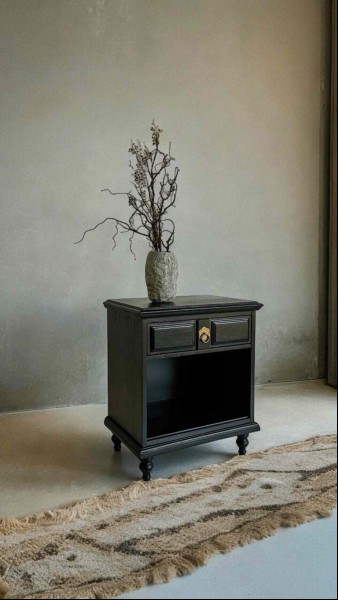
Some DIYers have the tendency to try to match a furniture piece to all their existing furnishings by using the same exact finish color and type. But in using a single color, DIYers may be missing out on creating visual interest and depth that can be achieved through contrasting or complementary hues, Meyers says.
She instead recommends that they experiment not only with different colors but finishes and techniques to accentuate any distinct features of the piece, which can ultimately add more personality and charm.
Along the same lines, Spaulding adds that not all furniture needs to be painted. If the piece is made of natural wood, try staining it with a new finish.
Recommended Articles
What Is Chalk Paint? What You Need to Know and How to Use It
If you’re a fan of rustic farmhouse interiors, you’ve probably seen or heard of chalk paint before. This popular decorative paint is commonly used for refinishing furniture and home decor and is known
Can I Use Exterior Paint Inside? Here's Everything You Need to Know
Interior paint is used for indoor areas like walls and ceilings, while exterior paint is used on surfaces like siding and fences outside the house. If you have exterior paint left over from an outdoor

What Is a Lanai vs. a Porch, Patio, or Veranda?
If you live in a warm-weather locale, you may be looking for ways to maximize your outdoor living space at home. A lanai, porch, patio, or veranda can significantly upgrade your outdoor space and exte

How to Renovate with Sustainability in Mind
Home renovations can always be stressful, but renovating and decorating your home in an eco-friendly way can feel extra overwhelming if you’re not sure where to start. The good news is that there have

Does a Dehumidifier Actually Cool a Room? Plus 7 Tips to Cool Your Home Fast
Dehumidifiers are commonly used to help regulate the indoor conditions and make the home feel cooler, especially in the summer months. But despite making the room feel cooler, a dehumidifier does not
10 Reasons Your Home Is So Drafty and How to Fix It Fast, According to Contractors
Air drafts can rapidly chill a house, no matter how much you run your heating system. If you've ever wondered why your house is so drafty, the causes are easy to pinpoint. Solutions can be as simple a

The Best Temperature to Pour Concrete
Whether you are looking to put in a new basketball net for the kids or install a workshop in the backyard, concrete is an important part of the process. However, concrete doesn't immediately become ha
Bathroom Paint: What to Know Before You Buy
When it's time to paint a bathroom, choosing the best type of paint for the room is the most important decision besides choosing wall colors. You want to choose a bathroom paint that is best suited fo