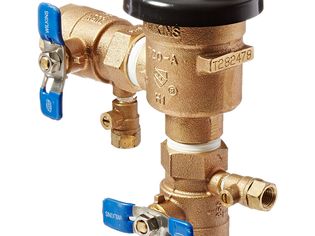
A pressure vacuum breaker (PVB) is a safety component of irrigation systems. It stops non-potable irrigation system water from flowing back to your home's drinking water supply.
Learn why a pressure vacuum breaker is essential, where to find it, and how to maintain it.
Why You Need a Pressure Vacuum Breaker
A pressure vacuum breaker prevents water contamination. Most local building codes require a backflow prevention device on water systems.
Since there is usually only one water system in the home for drinking water and all household use, including irrigation, there is always the risk of cross-contamination from backflow.
Backflow can occur if there is a sudden drop in the water pressure in the home's main water supply. For example, if the city water is interrupted for any reason, this could result in negative pressure on the home's main supply. Though rare, negative pressure can cause the water to flow backward in the pipes.
Where to Find the Pressure Vacuum Breaker
A pressure vacuum breaker is installed close to the water source before entering the sprinkler valves. It must be installed above the highest point in the system, usually the highest sprinkler head or the highest slope in the yard.
Most sprinkler systems have a PVB located outdoors, but sometimes it will be found indoors.
How a Pressure Vacuum Breaker Works
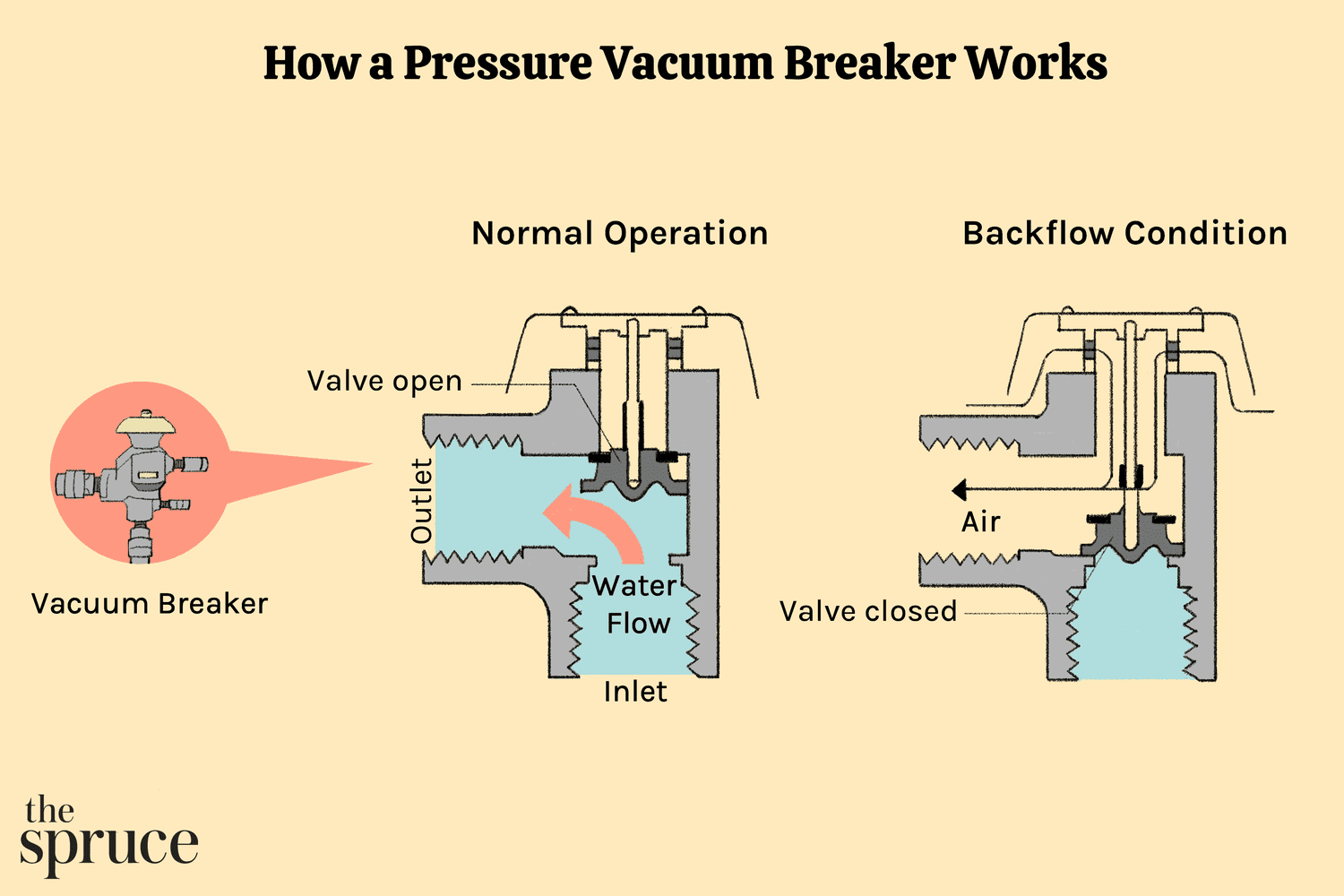
A pressure vacuum breaker consists of a check device or check valve and an air inlet vented to the atmosphere (open-air). The check valve allows water through and keeps the air inlet closed during normal conditions.
When the air pressure exceeds the water pressure, the vented chamber opens and breaks the suction effect of the low pressure. This prevents the water from backflowing.
The Spruce / Xiaojie Liu
Pressure Vacuum Breaker Maintenance
Regular maintenance for a pressure vacuum breaker is minimal. The internal components may need replacement every five years. Check on the PVB whenever inspecting the irrigation system.
O-ring gaskets that seal against the inner walls of the breaker might become brittle and crack over time. The plastic poppet and bonnet can also wear out. When these components malfunction, this can cause water to pour out from under the cap.
- Periodically, check the breaker for leaks.
- Check sealing tape/plumber's putty at connection points for leaks.
- They might leak if sealing tape or plumber's putty connecting either side of the breakers is worn, incorrectly installed, or missing.
- Check the connections and replace the seals, if necessary.
- Inspect the o-ring gasket integrity.
- Drain in winter to prevent blowout; open valves halfway.
- Check the sprinkler controller to make sure that it is working.
Winterizing a Pressure Vacuum Breaker
The most important regular maintenance item is protecting the PVB from freezing during cold weather. Draining the PVB during a sprinkler blowout is critical for winterizing a sprinkler system.
Failing to drain a PVB can damage its internal parts by cracking or bursting the PVB, requiring replacement.
Once the sprinkler system is winterized, the valves on a PVB typically are opened halfway to allow air to escape if residual water inside the PVB freezes. Air will prevent pressure buildup that can damage the parts.
Repairs
The internal components of a pressure vacuum breaker can become damaged by freezing and through regular use over time. A clear sign that something is not working properly is leaking from under the bell or bonnet assembly of the valve. Repair kits are available from the manufacturer specific to each PVB model.
A standard repair consists of turning off the inlet and outlet ball valves then removing the bonnet assembly. Since the repair parts are installed in the reverse order, it is good to keep the components well organized as they are removed.
The repair parts are then installed, and the water supply is turned on (inlet water supply valve first). The local building code may dictate whether or not a homeowner is allowed to repair the backflow device. If a homeowner is permitted to repair the backflow device, an inspection of some sort is likely required.
- Why is water spraying from my pressure vacuum breaker?
Water is spraying from the pressure vacuum breaker usually when there are leaks with the internal bushings or seals. Replace the seals to fix the problem of spraying water.
Are there any important regulations to remember about PVBs?Local plumbing code likely will require that your irrigation system be protected by atmospheric- or pressure-type vacuum breakers.
Recommended Articles
 PAINTING
What Is Chalk Paint? What You Need to Know and How to Use It
If you’re a fan of rustic farmhouse interiors, you’ve probably seen or heard of chalk paint before. This popular decorative paint is commonly used for refinishing furniture and home decor and is known
PAINTINGCan I Use Exterior Paint Inside? Here's Everything You Need to Know
Interior paint is used for indoor areas like walls and ceilings, while exterior paint is used on surfaces like siding and fences outside the house. If you have exterior paint left over from an outdoor
PAINTINGWhen and How to Remove Painter's Tape
Painter's tape is used to prep a surface before painting to mask off edges, ensure sharp lines, or create designs. Knowing how to tape a room and remove painter's tape can impact the success of your p
PAINTINGHow to Pick Out a Paint Sprayer
If you have ever painted a house and used a roller or paintbrush, you know it's a long, tedious job, seemingly with no end in sight, especially if you have to do more than one coat. Enter the paint sp
INTERIOR-DECORATINGWhat Carpet Is Best for Stairs?
Choosing the best carpet for stairs can be tricky because it has to have the appropriate durability and thickness for the job. It also has to look good as it is cut, wrapped, and tucked around the edg
HOME-IMPROVEMENTLearn the Rules for Overhead Clearance on Power Lines
Overhead power lines are subject to strict guidelines for minimum height clearances over streets, sidewalks, alleys, driveways, and other traffic areas. This is a safety consideration, aimed at keepin
HOME-IMPROVEMENTUnderstanding Electrical Wire Size Charts: Amperage and Wire Gauges
Whether you're installing, extending, or rewiring a circuit, finding out the wire gauge and amperage you will need is a key first step. The gauge—or size—of the wire used needs to match the circuit's
KITCHEN-REMODEL-AND-REPAIRIs Cabinet Refacing Worth the Price? A Home Reno Pro Breaks Down the Cost
Cabinet refacing upgrades a kitchen or bathroom without the high cost or disruption of complete cabinet replacement. On average, a full-size kitchen with about 30 feet of cabinets costs $8,300 for cab